Kimono 101: What to Wear — and When — in Japan
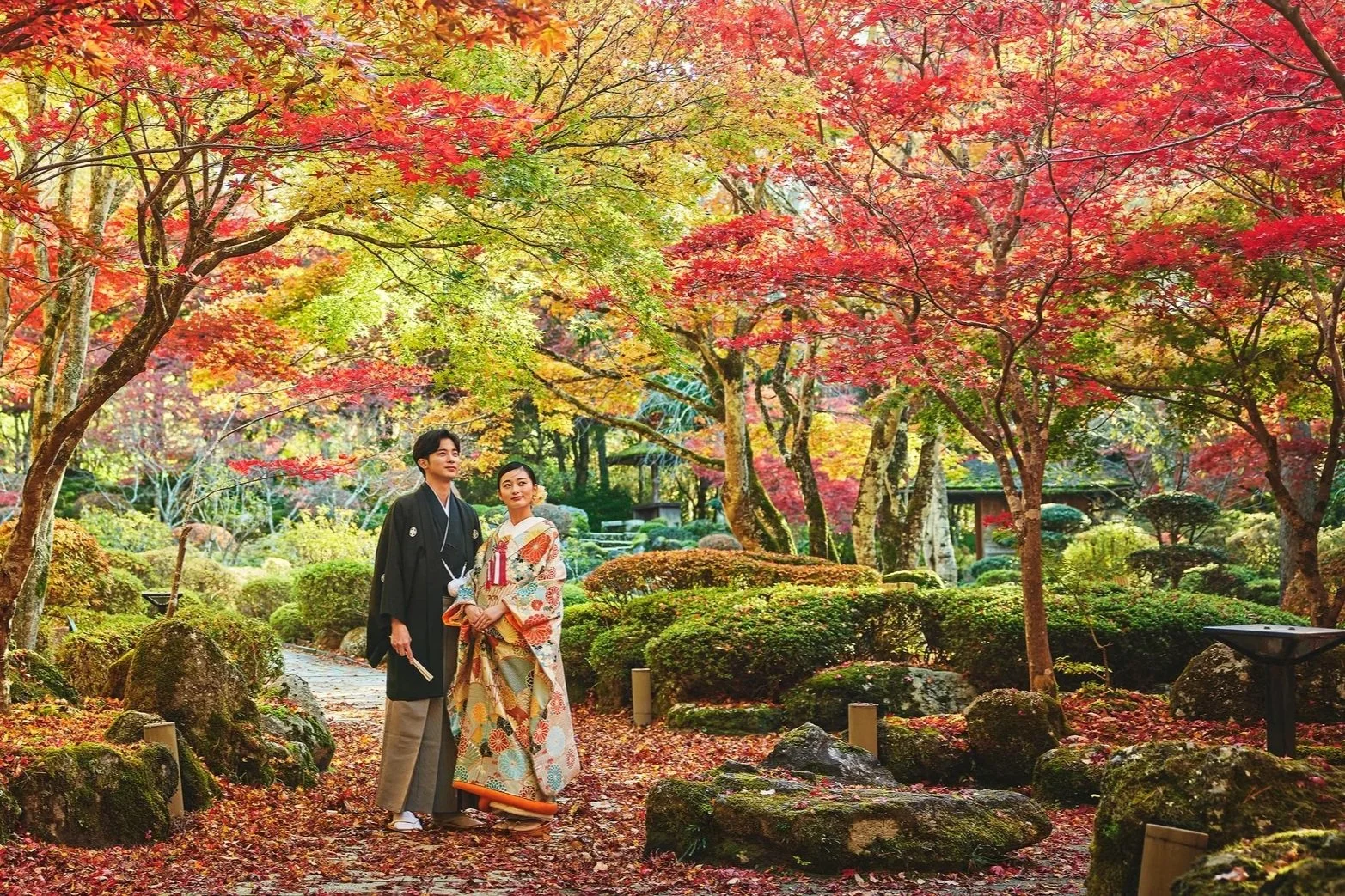
Before a Japanese wedding, it is essential to understand kimono types.
Many people outside Japan see kimono as one category. In reality, kimono are strictly classified. Each type matches a specific occasion, status, and life stage. Only the highest-grade kimono are suitable for wedding ceremonies.
For couples planning a wedding in Japan, or a kimono photoshoot, knowing the difference between everyday kimono and bridal kimono helps enormously. It guides styling choices and deepens appreciation of Japan’s respect for ritual and formality.
Bridal Kimono: The Highest Formal Wear for Weddings
Bridal kimono sit at the top of the kimono hierarchy. They are worn only for weddings or major ceremonial moments.
The most iconic style is Shiromuku(白無垢・しろむく). Made from silk, it is entirely white. White symbolises purity and respect for the new family. The kimono, obi, and headwear are all white. The atmosphere is solemn and sacred. Shiromuku is most often seen in Shinto ceremonies and remains the classic image of a Japanese bride.
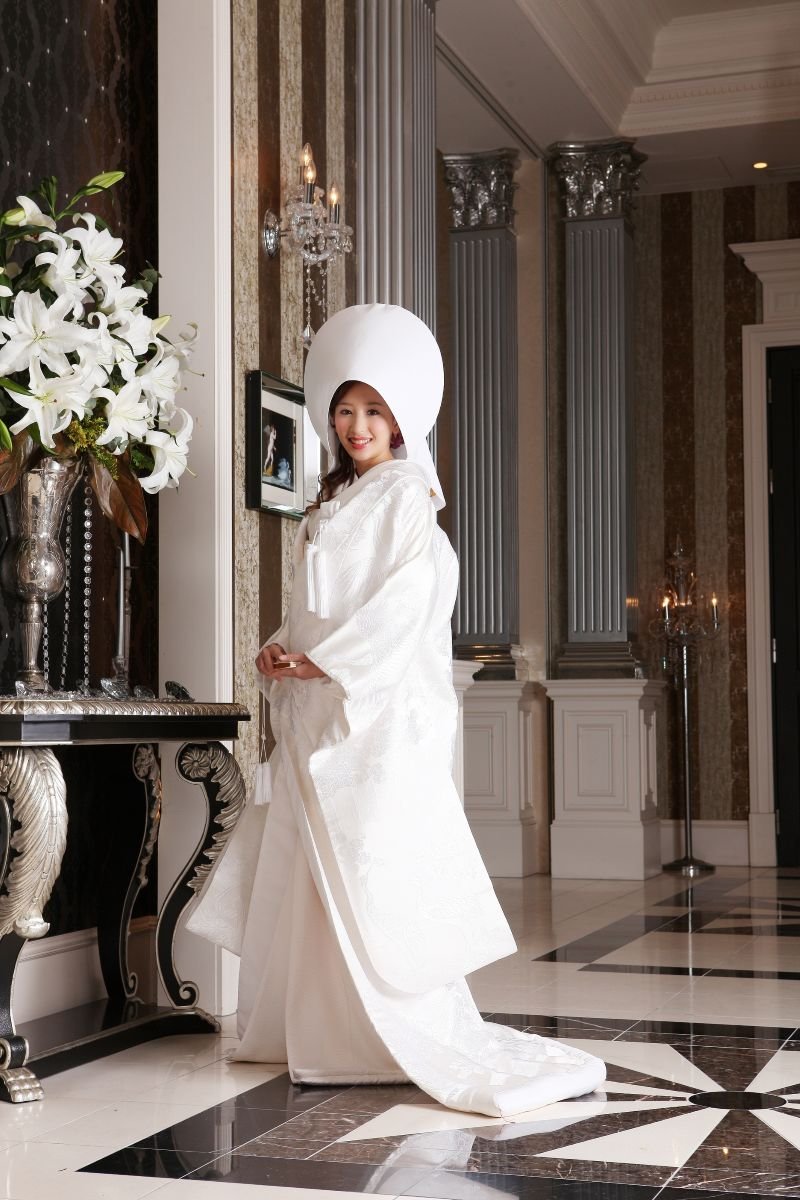
Shiromuku
Another popular choice is Iro Uchikake(色打掛・いろうちかけ). It is usually woven in Nishijin brocade. The fabric is thick and richly decorated with gold and silver threads. Colours are bold and luxurious. Motifs such as cranes, pine trees, and phoenixes symbolise happiness, longevity, and prosperity. Compared to Shiromuku, it is more visually dramatic. It is often worn for receptions or photo sessions.
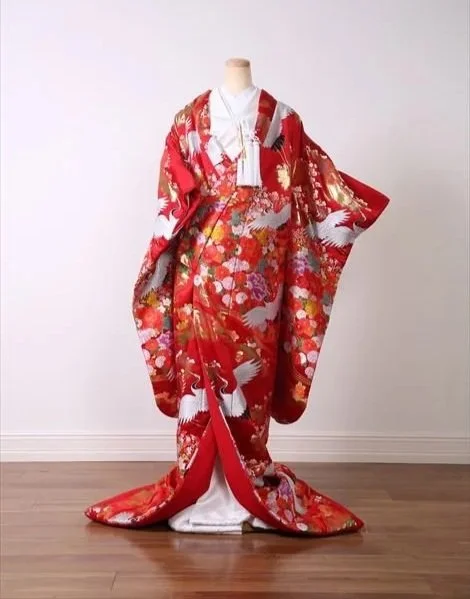
Iro Uchikake
Some brides choose Hikifurisode(引振袖・ひきふりそで). This is the most formal type of furisode for unmarried women. The sleeves are long and graceful. The hem trails lightly on the floor. It feels lighter than Shiromuku or Uchikake. It suits brides who want tradition with a softer silhouette.
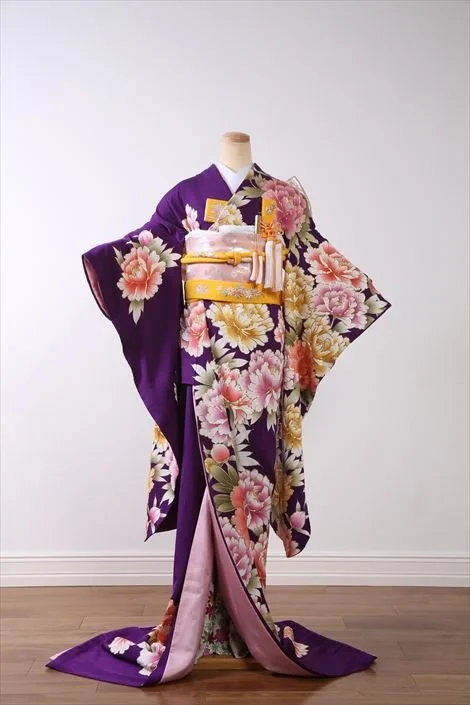
Hikifurisode
All three styles are considered the highest formal wear for women.
Everyday Kimono: Elegance for Daily Life and Celebrations
Everyday kimono are worn for outings, gatherings, festivals, or performances. They balance beauty with practicality. Designs are simpler and easier to move in.
The most common type is Komon(小紋・こもん). It features repeated patterns. The style is relaxed. It suits shopping, dining, or travel.
Another casual option is Tsumugi(紬・つむぎ). It is known for its handwoven texture. The look is natural and understated.
For slightly more formal occasions, such as tea gatherings or family events, women may choose Iromuji(色無地・いろむじ) or Tsukesage(付下・つけさげ). These styles are refined. Patterns are minimal and often placed on the hem or shoulder. They look elegant without being overly formal.
After marriage, women wear Tomesode(留袖・とめそで), the formal kimono for married women.
There are two types. Kurotomesode(黑留袖) is reserved for married women. Irotomesode(色留袖) can be worn by both married and unmarried women.
Tomesode feature shorter sleeves. Patterns appear only on the lower hem. Family crests are displayed on the garment. The overall style is calm and dignified.
Key Differences: More Than Appearance
The difference between everyday kimono and bridal kimono is not only visual.
Bridal kimono use heavy silk. They are layered and structured. The weight is significant. Professional dressers, known as kitsuke-shi(着付け師), are required. Accessories are complex.
Multiple obi layers, decorative cords, and headpieces all carry symbolic meaning.
Everyday kimono are lighter. Their structure is simpler. Movement is easier. They are suitable for long hours and walking.
Yukata, which are commonly seen, are different again. They are casual summer wear. They are suitable for fireworks festivals, ryokan stays, and seasonal matsuri. Most Japanese women can dress themselves in yukata.
These differences reflect a core value in Japanese culture. The occasion defines the attire. Important moments deserve the most formal expression
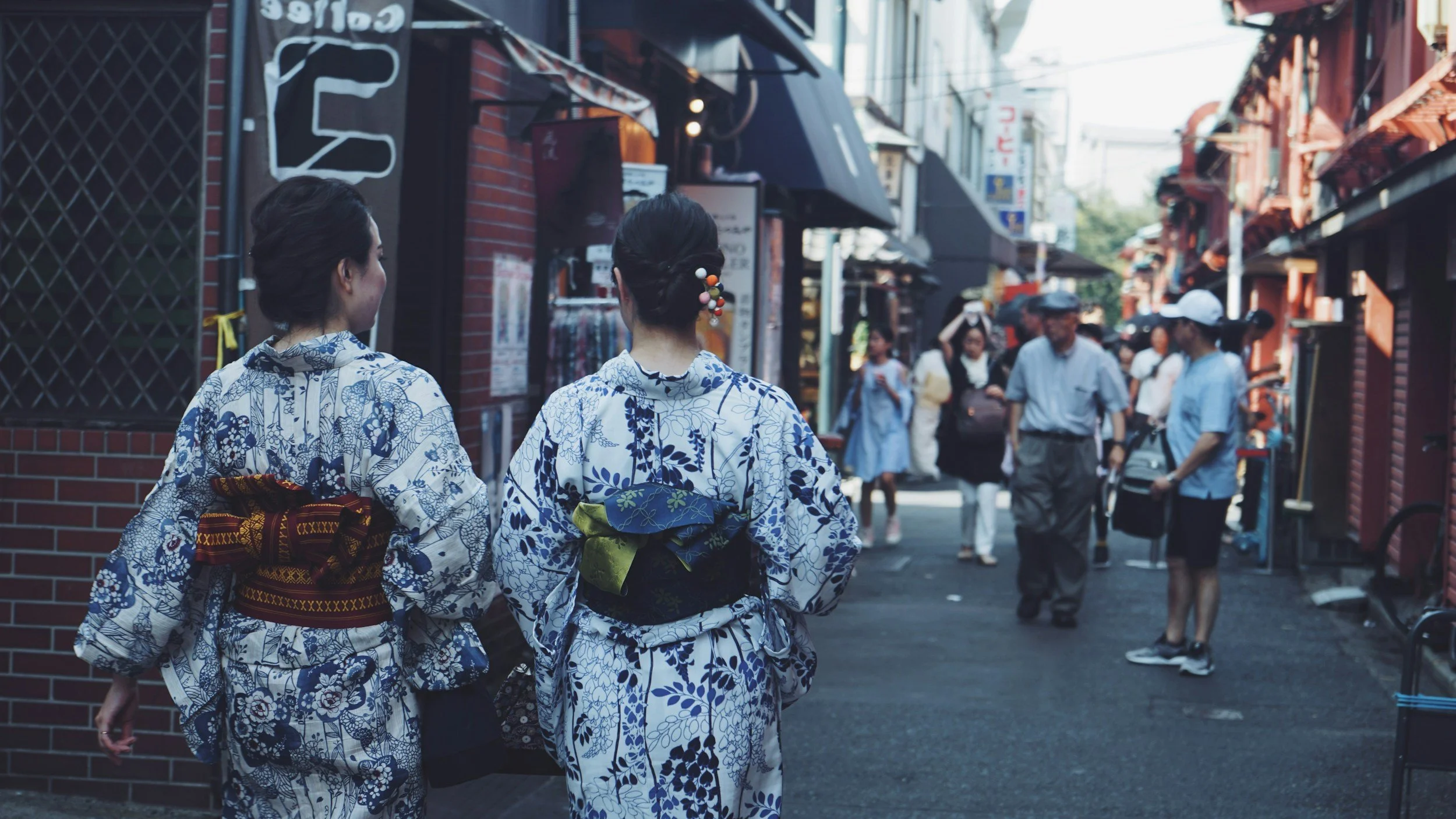
Yukata
Remember: Kimono is a Cultural Language
Kimono are not just garments. They are a language of culture.
Everyday kimono express subtle elegance. Bridal kimono convey ceremony and reverence. Each style reflects Japan’s view of beauty, etiquette, and life stages.
For couples, choosing a bridal kimono is more than a styling decision. It is an act of cultural respect. Understanding these distinctions allows the kimono to be worn with meaning, and makes the wedding or photos truly memorable.